
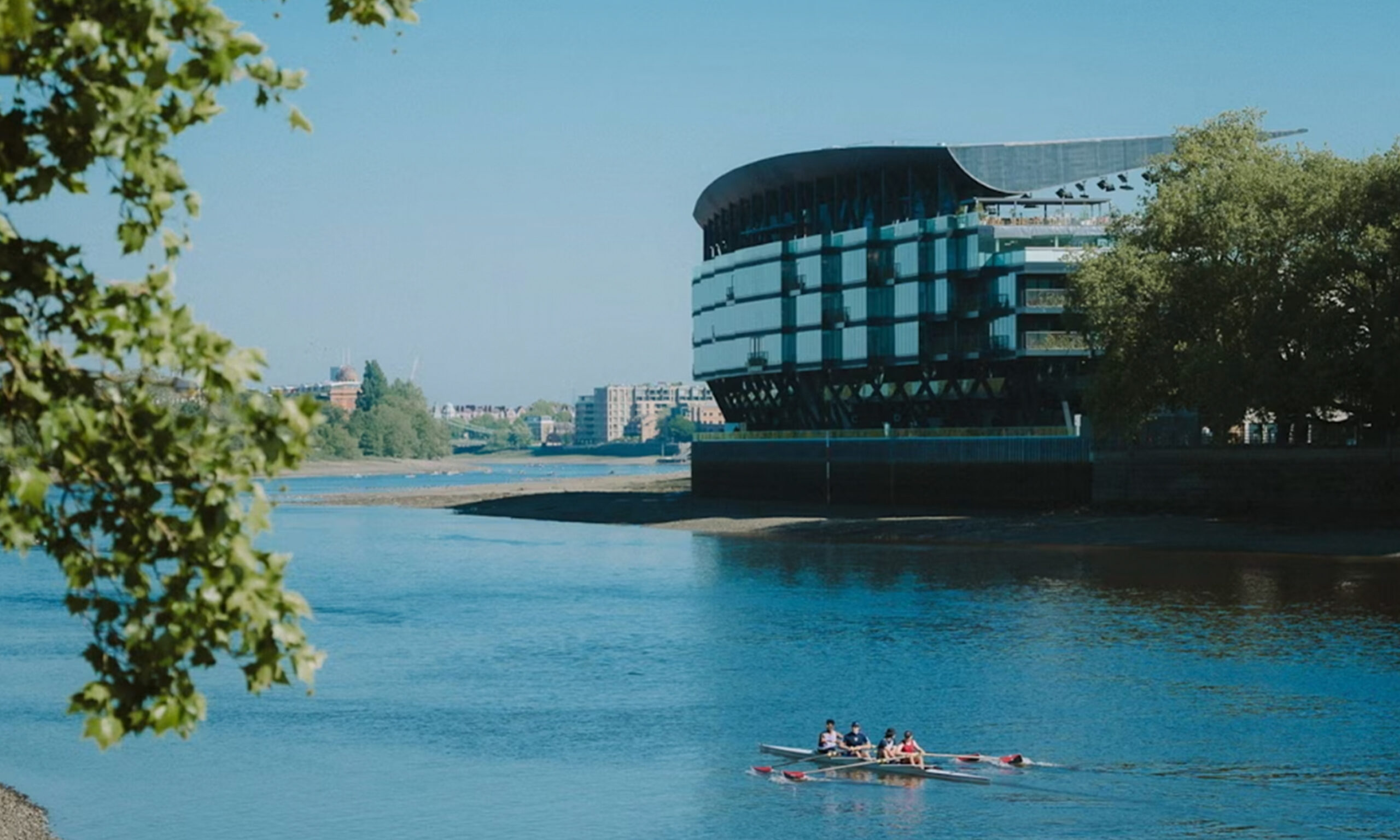

Fulham Riverside Stand
Stitching Stadium, Park, and River into a Civic Landscape.
Location: London, UK
Client: Fulham FC
Year: on-going
Area: circa. 1.1 hectares
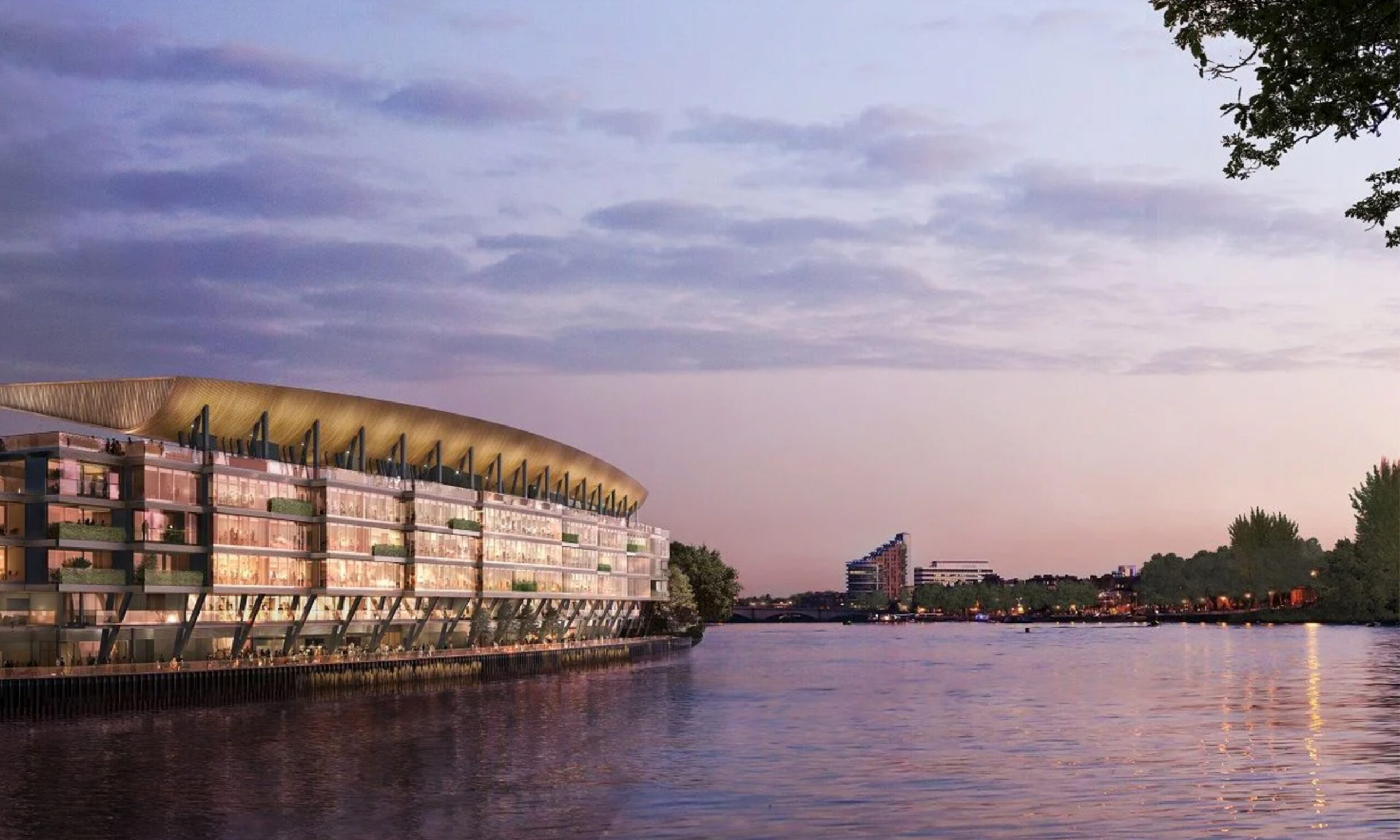
URBAN was engaged by Legends Global as part of the wider Riverside Stand restoration and redevelopment for Fulham Football Club, delivering a comprehensive landscape architecture service from concept design through to construction across multiple interrelated elements. The project brings together sport, hospitality, public realm, and landscape within one of London’s most sensitive and celebrated riverside settings. Set between the River Thames and Bishops Park, the development demanded a careful balancing of intensity and calm, privacy and openness, heritage and contemporary use. Landscape plays a central role in mediating these conditions—shaping arrival, framing views, softening architecture, and creating moments of generosity within a high-pressure urban site.
Restoring the Interface with Bishops Park and the Thames
A key focus of the project was the restoration and upgrading of the threshold between Bishops Park and the new Riverside Stand. This edge had long been fragmented and unresolved; the landscape strategy sought to mend this condition by creating a more coherent, legible, and welcoming transition between public park and stadium. Sensitive hardscape improvements, improved sightlines, and resilient planting schemes help to re-knit this urban edge, respecting the historic character of the park while accommodating the scale and activity of the new stand. The resulting landscape performs differently across the week—absorbing the intensity of match days while remaining calm, accessible, and green for everyday use by park visitors, local residents, and riverside walkers.
Hospitality, Terraces, and Interior Landscapes
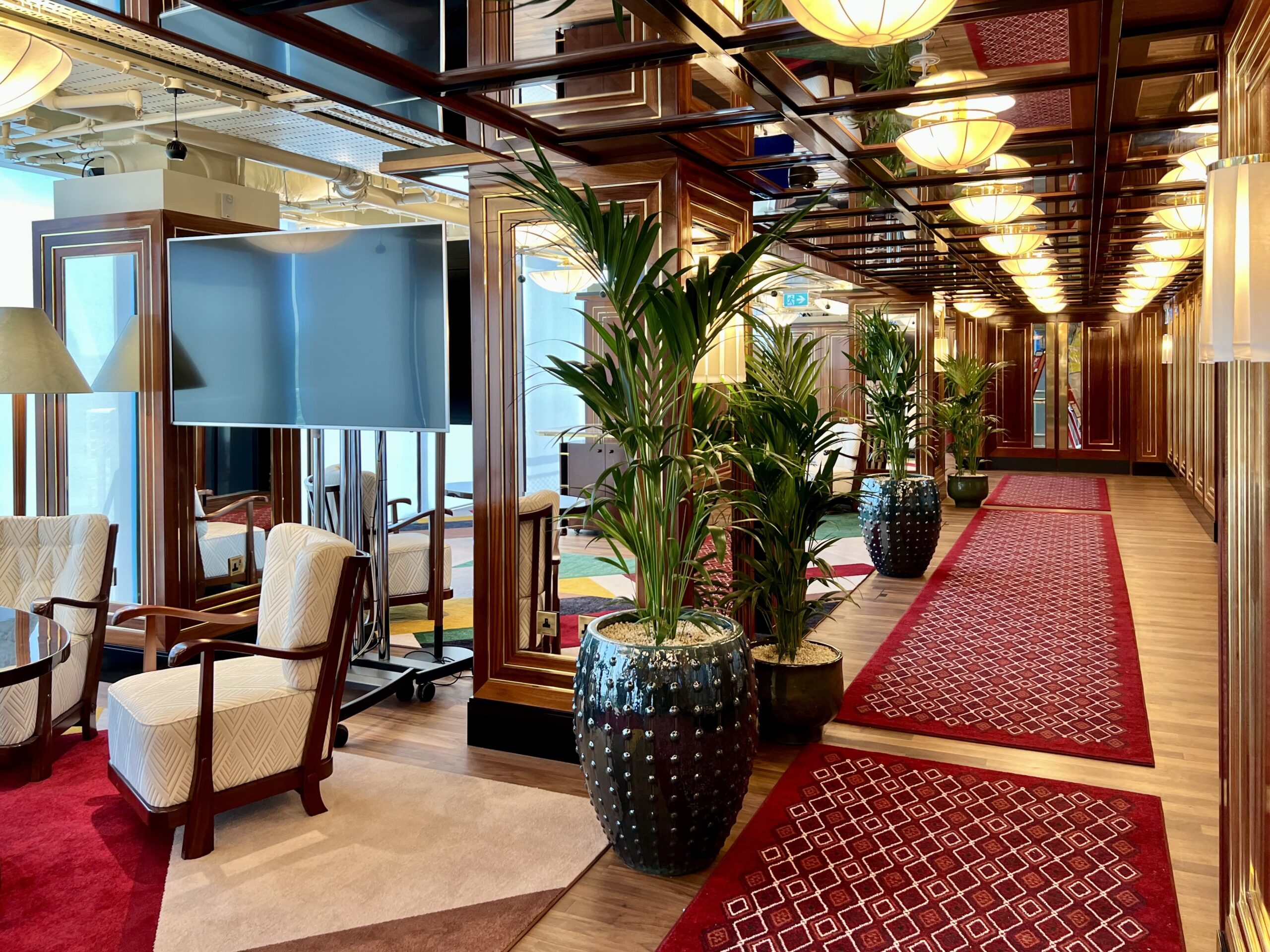
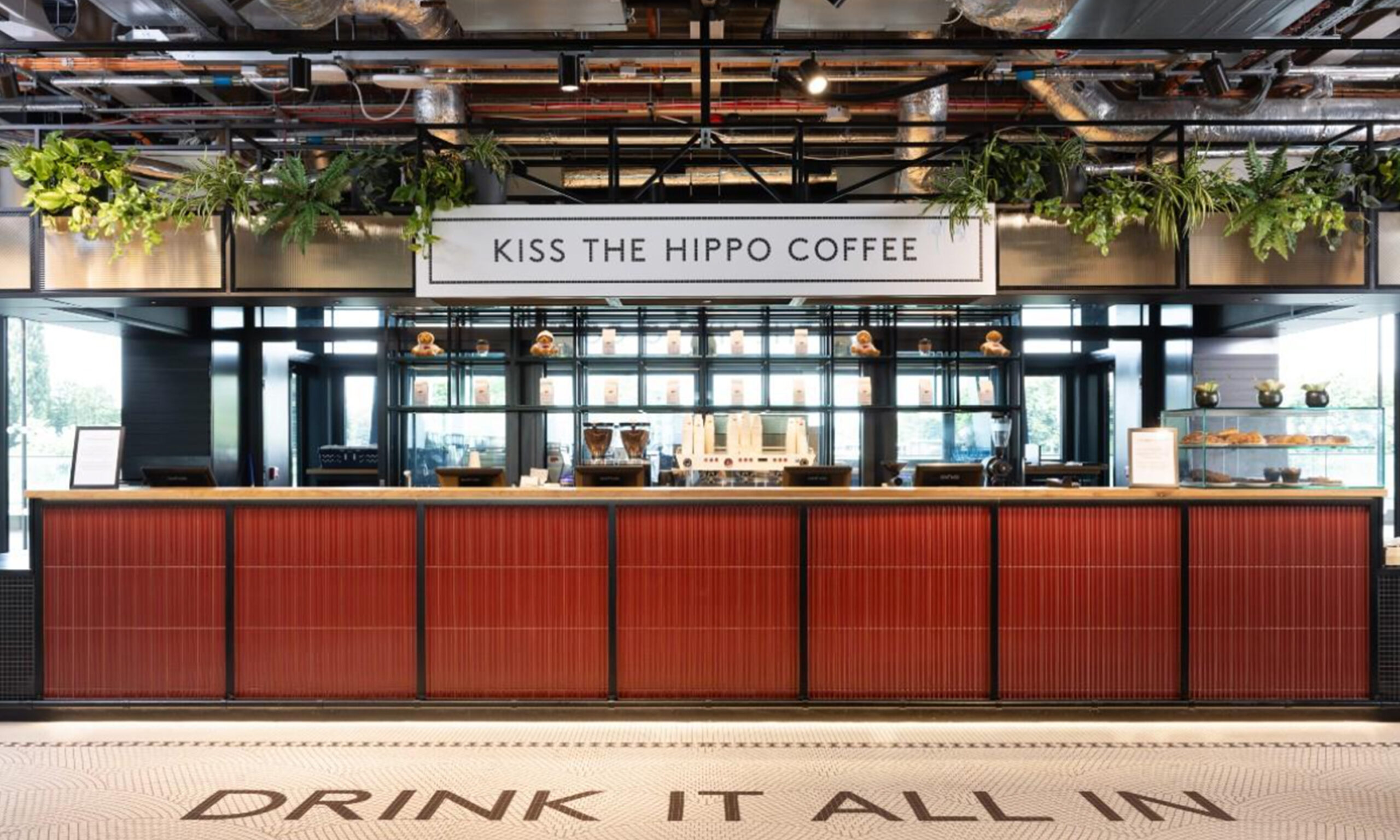
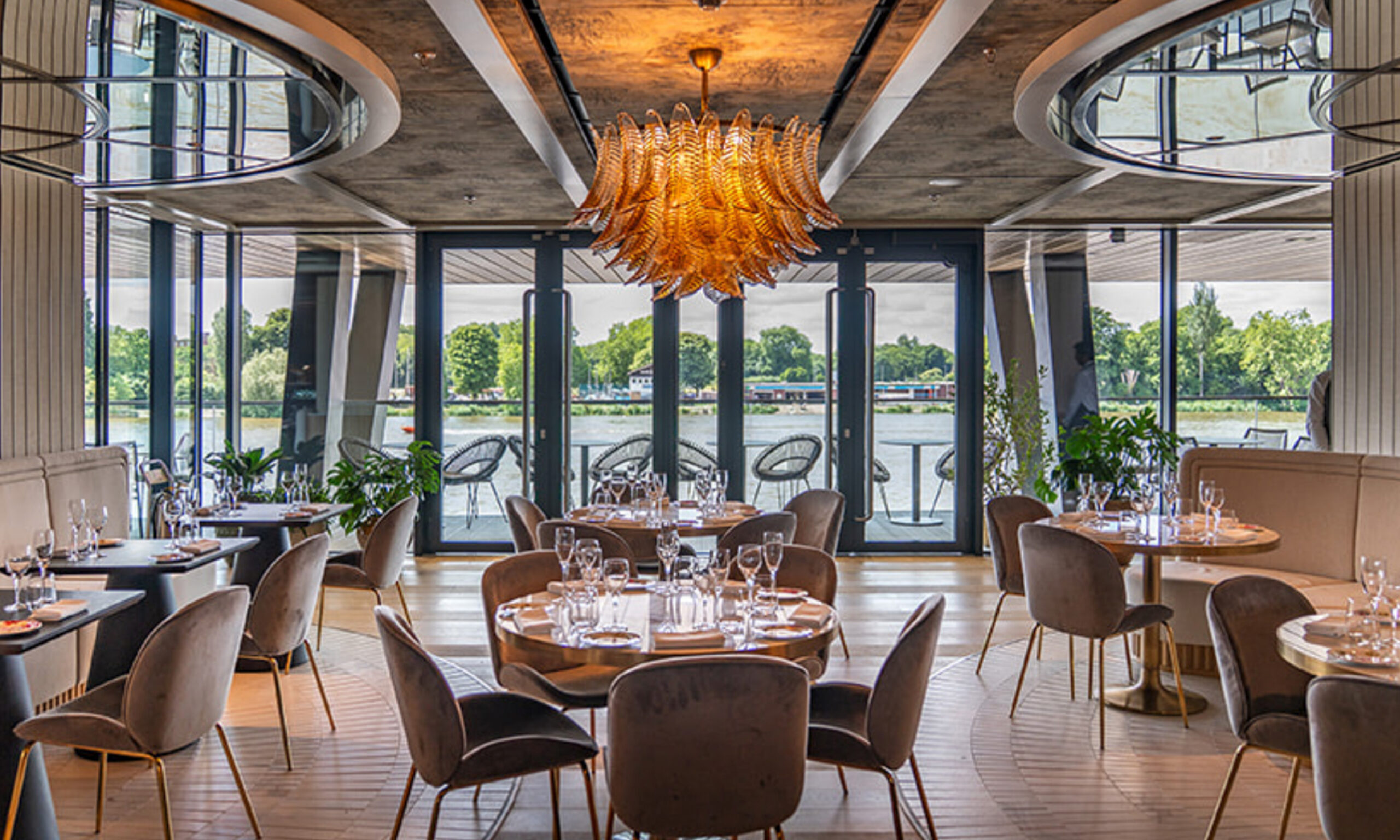
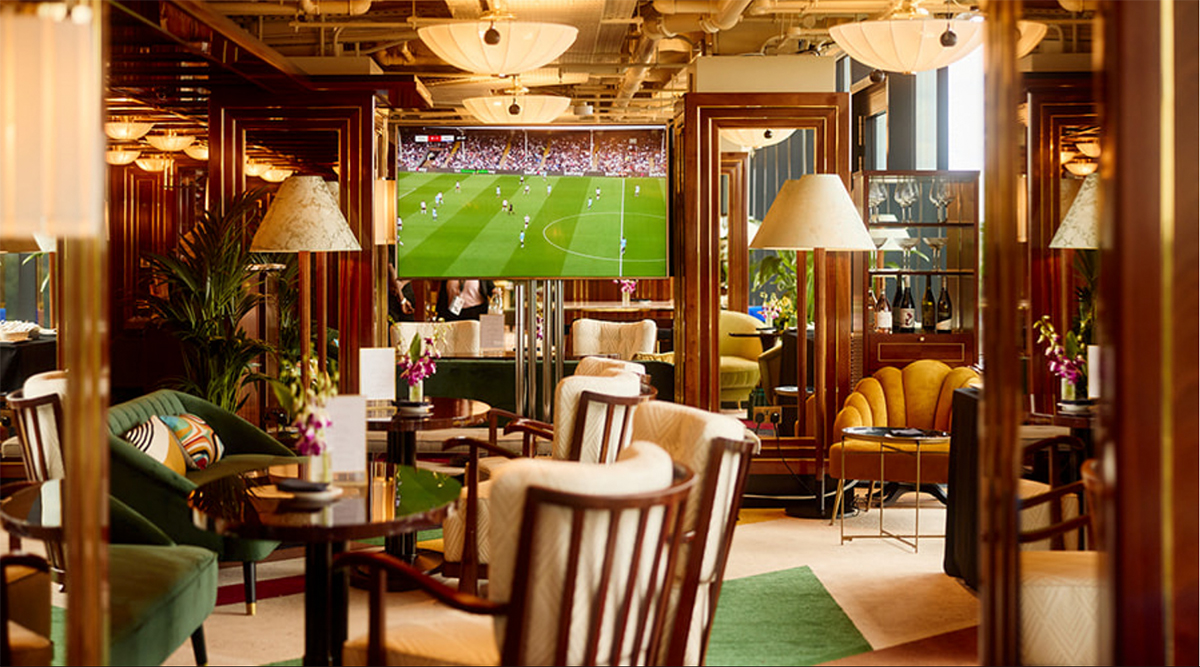
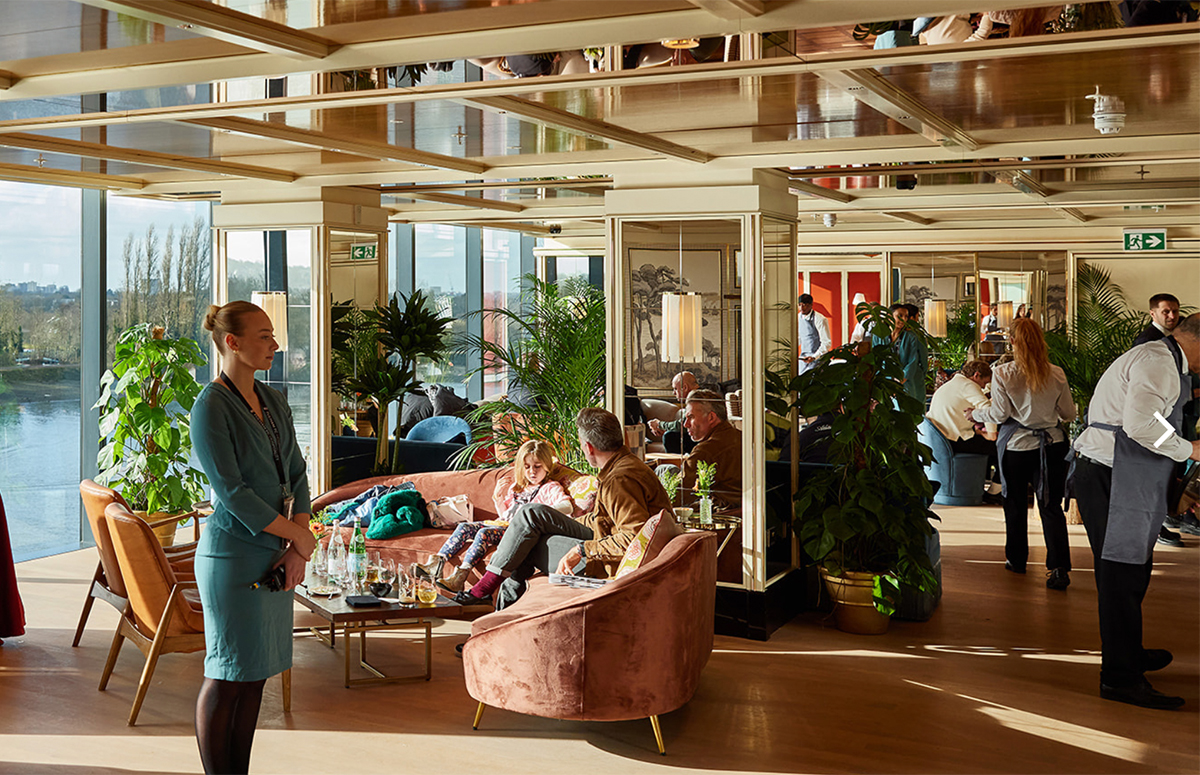
Beyond the public realm, URBAN delivered a comprehensive planting strategy across balconies, roof terraces, and interior spaces within Fulham Pier and the adjacent hotel. Balcony planting is designed for exposed, sun-drenched conditions without irrigation infrastructure, using robust, drought-tolerant species selected for structure, longevity, and year-round presence. These planted terraces soften the architecture and provide a calm, elegant backdrop for hospitality spaces overlooking the Thames and the pitch. Internally, lush planting extends across multiple levels, guiding visitors from arrival through lounges, circulation spaces, and private hospitality suites. Here, landscape is used to humanise interiors, improve air quality, and create moments of immersion and respite throughout the guest journey—reinforcing a continuous experience in which architecture and planting work together to celebrate Fulham’s unique riverside setting.